Skip to main content
Posts
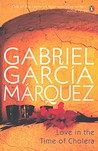 Love in the Time of Cholera by Gabriel García Márquez
My rating: 5 of 5 stars
I remember Sarah Anderson's comic about reading a book so good that leaves you brooding for quite sometime. This book has given me that feeling. After hearing so much about GGM, I finally decided to pick up this beautiful edition. I have developed the habit of taking notes while reading which helps a lot while reviewing the book, which in this case I took way too many (says volumes about the book).
This is a story of Florentino Ariza, Fermina Daza and Dr. Juvenal Urbino with many other significant and memorable characters. It spans around more than fifty years with lot of love and heartbreaks. What I loved about this book is the depiction of people with heartbreaking sense of reality; with warts and all. After reading Jane Austen, this book is the polar opposite experience. GGM doesn't pull his punches, which by the way, hit in you in guts many times (lot of gory and revolting narratives). He has a cruel sense of humour which makes you feel guilty while laughing.
In this book, there is infidelity in surprisingly large amount or maybe it's always there but we don't see it; but it doesn't mean love isn't there. Maybe the most illustriously written part of this book is the depiction of ageing process in all its micro details which sometimes make you depressed, thinking about imminent future. One quirky thing written here is about smoking cigarettes with lit end inside the mouth, which I found one of those fun tricks/facts you take away from a novel.
There is no dearth of fantastic mono/dialogs in it like "It is life, more than death, that has no limits" and "My heart has more rooms than a whorehouse". I couldn't list them all or it would become a short story sized review. I want to sum up the review by adapting from one of the lines in this book - 'It is a meditation on life, love, old age and death.'
View all my reviews
 Sense and Sensibility by Jane Austen
My rating: 3 of 5 stars
Classics! The old ones! They're always really tough to review; always so different style of writing than what I'm used to. This was no different. I liked the narration despite it being heavy with complex and long (which make you lose track really) sentences and outdated phrases like "they all looked their assent" (which means they all acknowledged), etc.
The plot will put Indian daily soaps to shame. So many twists and turns; so many WTH moments! The thing I didn't like though is the story was too simple (some pearls of wisdom were there) compared to today's stories, but it should be expected though I guess. What disappointed me the most was the typical happy ending. It just broke my heart, but hey, who am I to judge? These book are what they are. Some love them, some not so much!
All the classics I've read till date, especially before 20th century have simple story but profound prose, which to be frank can get repetitive and boring. If taken in an alternate sense though, it can be melancholic and enlightening (which I felt reading Dostoevsky but couldn't feel while reading Austen). Following are some points I felt necessary to note down while reading:
1. When and what do these people (especially women) do for day to day work? They're always having tea or chit-chatting or going for walks. They always get time to go and visit someone.
2. People give way too much importance to inheritance, money and hence, dowry while discussing marriages.
3. Austen tends to explain her characters where she needn't. Why one did, what he/she did; nothing is left for reader's imagination.
4. However passionate may the argument or dialog between people be, in that era, people always used civil language; how sad!
5. Old classics, this book included, use long sentences, consisting a lot of commas and semicolons. It makes one lose track of the sentence.
6. Both the instances of "friend-zoning" in this book are actually opposite compared to today's general scenario; men friend-zone ladies here, hence, reverse friend-zoning.
7. There were some creepy customs in 18th-19th century England, like exchanging lock of hairs as a symbol of love. Downright creepy!
So, that's all! Though I didn't love this book, it was definitely a very interesting read.
View all my reviews
 If on a Winter's Night a Traveler by Italo Calvino
My rating: 4 of 5 stars
Yes, there are some books you've heard a lot of hype about but don't live upto your expectations. This was one of them. This doesn't mean that it's a bad book as I'm no one to pass judgements towards books. What I may not like can be love of someone else.
So, what I liked about this book is obviously the narration style. The reader is the protagonist in this novel. The writer takes us on a journey to read a book 'If on a Winter's Night a Traveller'. We buy the book but there seems to be a problem in the book and so we go to replace it, but it starts a series of events where we stumble upon many books (or rather only beginnings of books) but are never able to complete any one of them.
This book might have been a try by the author to provide source for his stories which never went beyond intriguing beginnings. He elaborately has enticed the reader in reading all these unfinished stories. It sometimes reminded me of Vonnegut's style and insane logic of 'Catch-22'. All this was very interesting but there were patches in the book where I couldn't get much interested fully. There was heavy usage of complex words and phrases which seemed slightly out of place for this novel.
Overall, I liked the novel but I can't say I loved it. Maybe in future, if I reread it, the result maybe different.
View all my reviews
 The Beat Goes On by Ian Rankin
My rating: 4 of 5 stars
Even though this book took me one month to finish, it doesn't mean it was boring. It was a conscious decision to read this book of short stories one story at a time. My initial impression of this book was that these are tales of a less impressive Sherlock Holmes but I eventually understood that not every detective has to be compared with Holmes because Holmes, though a lamppost in crime fiction, isn't the sole approach for detective work.
Ian Rankin introduced me to DI John Rebus, brilliant, irascible and endlessly frustrating to both his friends and his long-suffering bosses (according to back-cover info). Rebus is a character which eventually grows on you and is much more relatable than hot shots like Holmes. A particular short story 'Sunday' tells us more about private life of Rebus which is dark, dull in a cool way and very unhealthy. His drinking is legendary according to Indian standards or even global standards for that matter. He has no problems gulping down a pint or two while he's on duty. He's also an habitual smoker and thinks about quitting many times without any success.
I like how Rankin keeps Rebus grounded. His cases are not extraordinary but which give us an impression of respectable genius of his case solving techniques. This book is a leisure read with no extra strain on the brain. I like that once in a while. It makes for a great bedside read.
View all my reviews
 Purple Hibiscus by Chimamanda Ngozi Adichie
My rating: 5 of 5 stars
I came across this book through a reader community I'm part of and heard a lot of praise. I bought it at an online sale but it shifted to the back of my TBR bookshelf which has grown to inordinate proportions. One day, I was watching BOOKRIOT's video which encouraged reading books by authors of colour. So, I decided to make it a habit to read those books more frequently and picked up this book.
After completing this book in two days, I was mesmerised by the depth of this novel. Without writing directly, it deals with two-face nature of human beings; without us realizing it. Everyone in the protagonist's direct family has a double nature with only an ideal face shown to general public, who revere them. Protagonist's father, a much respected man in the community is a tyrant, violent man and a religious fanatic. He hits them and feels sorry too as he's doing it for the lord. It is heart wrenching to read the conflicts going on in the protagonist's mind. She understands that her father hitting them is wrong but she's convinced after going through so much religious propaganda since childhood that he is doing it for their betterment only. It was like a complicated, domestic case of 'Stockholm Syndrome'.
I am very impressed with Adichie and her able writing style. I will e following her work in future too. I recommend this story of domestic abuse, religious fanaticism, attraction of western culture, delicate relations, adolescent attractions, regional problems and hard decisions to everyone.
View all my reviews
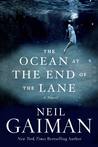 The Ocean at the End of the Lane by Neil Gaiman
My rating: 5 of 5 stars
Sometimes after reading a book, when you sit to write a review, you wonder what I can write so that it won’t belittle the greatness of that book. Something of that sort is happening to me after reading this one. Finishing this 240 something page book in almost one sitting, I am left with a cauldron-full of emotions. Childhood, innocence, magic, harsh realities, way of life and deep philosophies in simplest of sentences; that’s what this book is made of. Neil Gaiman is a wizard of words. This will be the third book of his that I read and every time I am left at loss of words when reviewing the book. Some sentences just steal your heart. At “You don’t pass or fail at being a person dear!” I was holding my kindle and trying not to overflow with emotions. Another sentence which shuts you up is “death happened to her. Death happens to all of us.”
This is not a children’s book even though it may seem so, not exclusively. It contains some creepy and disturbing stuff which one can’t explain to a child properly. It is to be read in childhood and understood in adulthood. That’s the best I could describe this book.
View all my reviews
 Go Set a Watchman by Harper Lee
My rating: 5 of 5 stars
It's rare that I finish a book in a single day. I did it with this book. A writer who has written only two books is rare and that too half a century apart is even so! Harper Lee gives us an unexpected but very deserving sequel to her 'To kill a mockingbird' with Jean Louise of 26 years old as protagonist. Many things have changed in these years, some characters are gone, others are added to the narrative but the soul of this book is the same. You get the same feeling you had when you read 'To kill..'. The only necessary difference is you get to see this Maycomb county directly from an adult perspective as opposed to the case of 'To kill..' in which one had to interpret a child's observations. I loved this book; especially the climactic intellectual intercourse between Scout, Atticus Finch and Dr. Finch. Reading it in one sitting helped of course to stay with the characters. One can't help but get mesmerised by the dialogs and philosophies in this book.
"Every man's an island, Jean Louise, every man's a watchman, is his conscience."
"Our gods are remote from us, Jean Louise. They must never descend to human level."
View all my reviews