Skip to main content
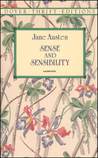 Sense and Sensibility by Jane Austen
My rating: 3 of 5 stars
Classics! The old ones! They're always really tough to review; always so different style of writing than what I'm used to. This was no different. I liked the narration despite it being heavy with complex and long (which make you lose track really) sentences and outdated phrases like "they all looked their assent" (which means they all acknowledged), etc.
The plot will put Indian daily soaps to shame. So many twists and turns; so many WTH moments! The thing I didn't like though is the story was too simple (some pearls of wisdom were there) compared to today's stories, but it should be expected though I guess. What disappointed me the most was the typical happy ending. It just broke my heart, but hey, who am I to judge? These book are what they are. Some love them, some not so much!
All the classics I've read till date, especially before 20th century have simple story but profound prose, which to be frank can get repetitive and boring. If taken in an alternate sense though, it can be melancholic and enlightening (which I felt reading Dostoevsky but couldn't feel while reading Austen). Following are some points I felt necessary to note down while reading:
1. When and what do these people (especially women) do for day to day work? They're always having tea or chit-chatting or going for walks. They always get time to go and visit someone.
2. People give way too much importance to inheritance, money and hence, dowry while discussing marriages.
3. Austen tends to explain her characters where she needn't. Why one did, what he/she did; nothing is left for reader's imagination.
4. However passionate may the argument or dialog between people be, in that era, people always used civil language; how sad!
5. Old classics, this book included, use long sentences, consisting a lot of commas and semicolons. It makes one lose track of the sentence.
6. Both the instances of "friend-zoning" in this book are actually opposite compared to today's general scenario; men friend-zone ladies here, hence, reverse friend-zoning.
7. There were some creepy customs in 18th-19th century England, like exchanging lock of hairs as a symbol of love. Downright creepy!
So, that's all! Though I didn't love this book, it was definitely a very interesting read.
View all my reviews
Popular posts from this blog
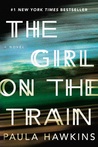 The Girl on the Train by Paula Hawkins
My rating: 4 of 5 stars
I rarely read thrillers, but I had heard so much about this book and now a movie is coming out, so I decided to see what all the fuss was about. This book consists of a very limited number of characters which is good for a newbie reader to understand. Author maintains the suspense till the end despite having so few characters. A particular thing I learned from this book is the protagonist need not be a strong, firm character. Author takes the worn out, drunk and (some may call it) a loser Rachel as the chief protagonist with equally important characters of Megan and Anna. All three characters are narrating the story and author being a lady, it feels more authentic and realistic to read all three women voices. Author has certainly played her strong points. Though the ending didn't match my expectation, it was already sky high, so no let down there. Although, me not being a staunch thrillers fan, I thoroughly enjoyed the book.
View all my reviews
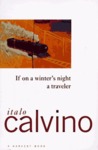 If on a Winter's Night a Traveler by Italo Calvino
My rating: 4 of 5 stars
Yes, there are some books you've heard a lot of hype about but don't live upto your expectations. This was one of them. This doesn't mean that it's a bad book as I'm no one to pass judgements towards books. What I may not like can be love of someone else.
So, what I liked about this book is obviously the narration style. The reader is the protagonist in this novel. The writer takes us on a journey to read a book 'If on a Winter's Night a Traveller'. We buy the book but there seems to be a problem in the book and so we go to replace it, but it starts a series of events where we stumble upon many books (or rather only beginnings of books) but are never able to complete any one of them.
This book might have been a try by the author to provide source for his stories which never went beyond intriguing beginnings. He elaborately has enticed the reader in reading all these unfinished stories. It sometimes reminded me of Vonnegut's style and insane logic of 'Catch-22'. All this was very interesting but there were patches in the book where I couldn't get much interested fully. There was heavy usage of complex words and phrases which seemed slightly out of place for this novel.
Overall, I liked the novel but I can't say I loved it. Maybe in future, if I reread it, the result maybe different.
View all my reviews
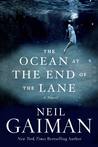 The Ocean at the End of the Lane by Neil Gaiman
My rating: 5 of 5 stars
Sometimes after reading a book, when you sit to write a review, you wonder what I can write so that it won’t belittle the greatness of that book. Something of that sort is happening to me after reading this one. Finishing this 240 something page book in almost one sitting, I am left with a cauldron-full of emotions. Childhood, innocence, magic, harsh realities, way of life and deep philosophies in simplest of sentences; that’s what this book is made of. Neil Gaiman is a wizard of words. This will be the third book of his that I read and every time I am left at loss of words when reviewing the book. Some sentences just steal your heart. At “You don’t pass or fail at being a person dear!” I was holding my kindle and trying not to overflow with emotions. Another sentence which shuts you up is “death happened to her. Death happens to all of us.”
This is not a children’s book even though it may seem so, not exclusively. It contains some creepy and disturbing stuff which one can’t explain to a child properly. It is to be read in childhood and understood in adulthood. That’s the best I could describe this book.
View all my reviews
Comments
Post a Comment